
When it comes to NFL games, fans often find themselves asking, “How long is this rollercoaster ride of excitement?” With the thrill of touchdowns and the agony of penalties, the clock can seem like a mysterious entity. It’s not just a game; it’s a spectacle that keeps you on the edge of your seat—sometimes for longer than you might expect.
Understanding NFL Game Duration
NFL games offer a unique blend of excitement and unpredictability, with the duration often feeling less straightforward than it seems. Game length can vary due to numerous factors like scoring plays and stoppages, contributing to an engaging experience for fans.
Overall Game Length
An NFL game comprises four quarters, each lasting 15 minutes. Typically, games average around three hours in total. This includes the clock running during possessions and various stoppages. On average, the ball is in play for approximately 11 minutes out of the three-hour duration. Factors such as penalties, timeouts, and injuries prolong the time as well. Unexpected events, like lengthy reviews, can also affect the overall length. Fans anticipate dramatic moments and strategic plays, adding to the thrilling nature of the experience.
Halftime and Breaks
Halftime lasts 12 minutes during regular-season games. During playoff games, it extends to 15 minutes. Breaks between quarters occur, but they usually last only 2 minutes. Commercials can contribute up to 30 minutes of total break time in a standard game. Different types of stoppage also occur, like official reviews and injuries, which can add to the overall duration. Spectators should expect timeouts, allowing coaches to strategize. The combination of these factors creates the overall rhythm, making the NFL game experience unique and compelling.
Game Structure
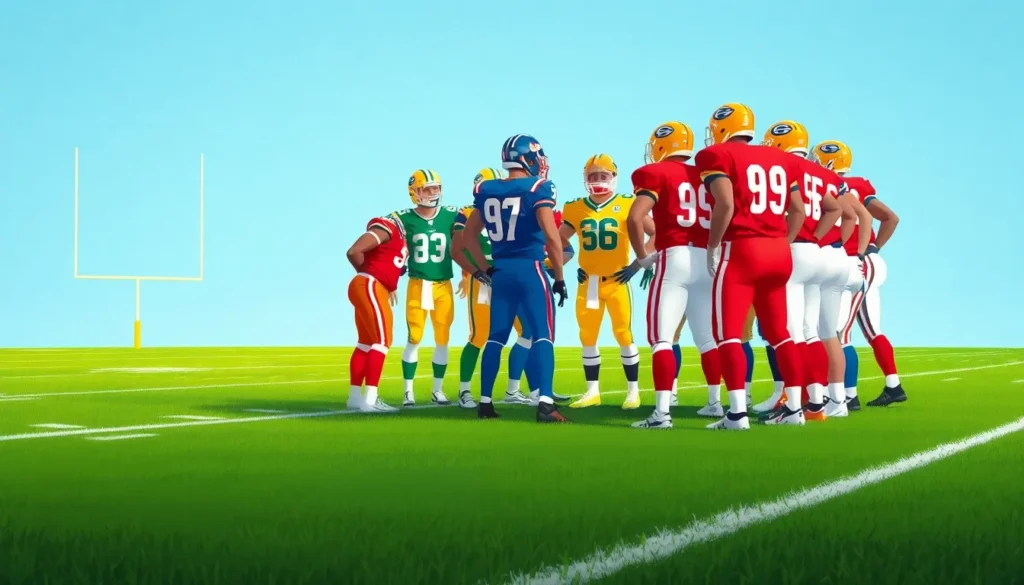
NFL games feature a structured format that includes specific time allocations and rules. Understanding this structure enhances the viewing experience.
Four Quarters
Each NFL game consists of four quarters, each lasting 15 minutes. This setup totals 60 minutes of regulation time. However, the clock does not run continuously. Factors such as stoppages for incomplete passes, timeouts, and player injuries can extend the time spent in each quarter significantly. In practice, fans often watch a game that lasts around three hours due to these interruptions. Games also involve additional breaks, including the two-minute warning near the end of each half, which adds strategic elements to team play.
Overtime Rules
Overtime rules come into play if a game ends in a tie. During the regular season, a 10-minute sudden death period occurs, and the first team to score wins. If neither team scores within that time, the game ends in a tie. Playoffs adopt a different approach, ensuring that both teams get a possession unless the first team scores a touchdown. Overtime thus extends the overall game length, intensifying the excitement for fans as teams battle for victory.
Factors Affecting Game Length
NFL game length varies due to several factors that impact how time unfolds on the field.
Television Timeouts
Television timeouts significantly affect game duration, often extending it by several minutes. These breaks allow networks to air commercials, which enhance their advertising revenue. Standard television timeouts occur after stoppages, particularly during change of possession and following scores. Each timeout lasts around 2 minutes, adding up quickly throughout the game. Overall, these breaks can contribute 30 minutes or more of additional time to a game’s length, impacting viewer experience. Fans often feel the game stretches longer due to these interruptions, even though they’re essential for coverage.
Penalties and Reviews
Penalties and reviews routinely extend the length of NFL games. Referees assess penalties that can halt play for varying periods, depending on the severity and situation. Common penalties, like holding or offsides, may add a minute or two each time they occur. Official reviews for scoring plays or critical calls also add delays, often lasting several minutes as the officials consult video footage. Combined, these factors can prolong game time by as much as 15 minutes or more, enhancing the tension and unpredictability of the game. Fans might experience mixed emotions as the clock ticks, anticipating crucial moments while waiting for decisions.
Comparison to Other Sports
NFL game length often stands out when compared to other sports. Understanding these differences enhances the viewing experience and allows for better engagement with the sport.
NFL vs. College Football
An NFL game typically lasts around three hours, while college football games often extend to over three and a half hours. College games feature longer halftime breaks of about 20 minutes. With additional stoppages and a greater number of timeouts, the overall game duration can feel more prolonged. Clock stoppages in college football occur for first downs, while the NFL only stops for certain changes, adding to the perceived length. Fans notice these distinctions, contributing to different game atmospheres.
NFL vs. Major League Baseball
In contrast, Major League Baseball games frequently average over three hours as well, yet the dynamics vary significantly. Baseball does not have a game clock. Each inning involves varied durations, influenced by pitcher-catcher interactions and the number of batters faced. NFL games usually feature structured quarters with defined timeframes that keep the flow continual. While both sports can extend due to various interruptions, the methods of maintaining game duration highlight their differences. Each sport offers unique pacing, ensuring diverse viewer experiences.
NFL games embody a captivating blend of strategy and excitement that keeps fans on the edge of their seats. The intricate clock management and various stoppages contribute to a game experience that often feels longer than the actual playtime. With each quarter packed with potential game-changing moments the unpredictable nature of the NFL ensures that every second counts.
As viewers immerse themselves in the action they not only witness athletic prowess but also the drama that unfolds with every play. This unique structure and pacing set NFL games apart from other sports making them a thrilling spectacle worth experiencing.